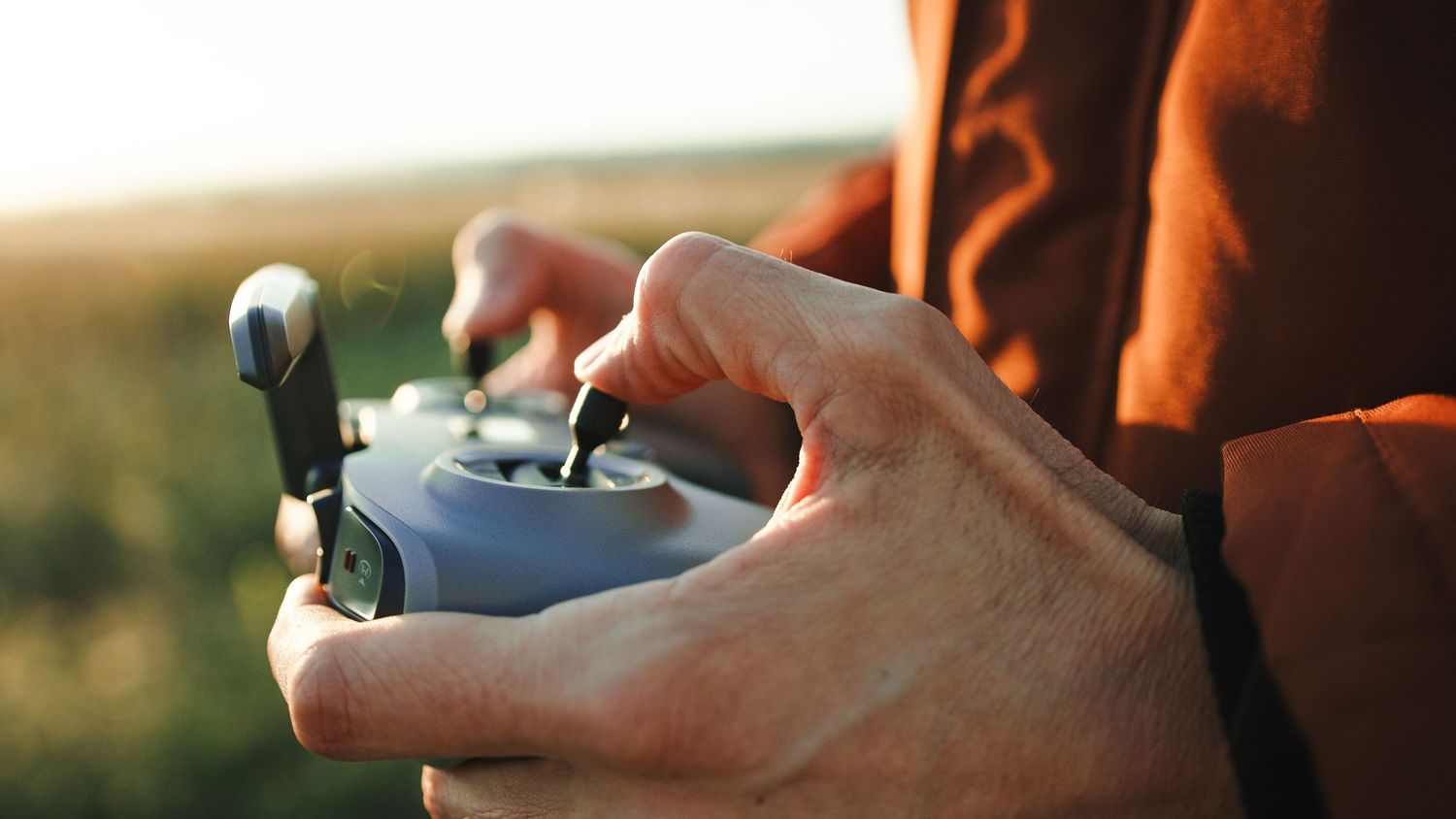
Why I Decided to Go After It
Getting my Part 107 was something I knew I needed to do if I wanted to take drone work seriously and build something bigger with it. I already had the interest, the drive, and the vision for where I wanted this to go, but I needed the certification behind it so I could start moving with more intention.
What made it interesting is that I did not study under perfect conditions. I had to fit roughly 30 hours of studying into Easter weekend while I was taking my family to South Padre Island, and my test was scheduled for the following Monday. That meant I could not casually work through it whenever I felt like it. I had to stay focused and make every hour count.
How I Studied for the Test
I bought a $30 course from Drone Pro Academy and treated it the same way I used to treat classes back in college. I watched all of their videos, took notes as I went, and completed the course like I was back in engineering school.
It was definitely less stressful than engineering school, but I still approached it the same way because I wanted to be prepared instead of just hoping for the best. I was not looking for shortcuts. I wanted to actually understand the material well enough to pass and be able to use the knowledge afterward.
How My Wife Helped Me Lock It In
One of the most helpful parts of the entire process happened on the drive home Sunday. Since my test was the very next day, I needed everything to stay fresh in my head. My wife wanted to be a passenger princess on the ride back, so I had her start asking me questions while we were driving.
That ended up helping a lot more than I expected.
Reading notes is one thing, but being forced to answer questions out loud is different. It makes you actually recall the information instead of just recognizing it on a page. That drive home turned into a final review session, and it helped me lock in a lot of what I had been studying all weekend.
The Hardest Parts for Me
The hardest part for me was learning the weather codes, especially METARs. That section probably took the most repetition before it really started making sense.
The other difficult part was learning how to read aeronautical charts and understanding airspace. Knowing what airspace drone pilots are allowed to fly in, where they are allowed to travel, and what restrictions apply took real effort. Those were the two areas I spent the most time studying because they felt like the most technical and the most important to really understand.
What Caught Me Off Guard on Exam Day
What threw me for a loop was that once I got into the actual test, I ended up seeing more regulations and laws than I expected. Since I had spent more time focusing on METARs and aeronautical maps, I had not studied the regulations side as heavily as I should have.
At that point, I had to slow down and rely on process of elimination. I worked through the questions carefully, got rid of the answers that clearly did not make sense, and trusted that the studying I had done would carry me through the rest.
That was a good reminder that even if one topic feels harder than the others, you still have to spread your attention across everything.
What the Test Is Like
The Part 107 test gives you 65 questions, and 5 of those do not count toward your score. You only need a 70 percent to pass. That means you do not need to be perfect. You just need to put in the work, understand the concepts, and stay calm when the test gives you something different than what you expected.
If you have honestly spent around 30 hours studying and taken it seriously, passing is very realistic.
My Result
I passed with an 87.
I was happy with that, especially considering how much of my studying had to happen over a busy holiday weekend and how much the regulations-heavy part of the exam caught me off guard. I have already received my temporary pilot certificate, and now I am waiting for the physical card to show up in the mail.
For me, passing the exam was not just about checking a box. It was the first real step toward expanding what I can offer professionally.
What I’m Doing With My Part 107 Now
Now that I have my Part 107, I am pushing harder into aerial imagery and inspections, especially for industrial and construction environments. That fits naturally with my background because of my mechanical engineering experience.
I used to be a project manager on multimillion-dollar projects where I was the lead engineer managing vendors, logistics, schedules, and technical execution. Because of that, I feel like I can offer clients more than just drone footage. I can also bring useful insight into the kind of environments I am working in and understand the type of details that matter on industrial and construction jobs.
Why My Background Gives Me a Different Angle
Having a degree in mechanical engineering and specializing in aerospace gives me a different angle than a lot of people entering drone work. I am not only interested in creating good-looking visuals. I also understand process, equipment, systems, project flow, and the technical side of the environments I want to work in.
That matters when clients need more than just media. They need someone who understands how to document a site, how to look at a structure, how to work around real project conditions, and how to provide value beyond just flying a drone.
The Types of Drone Services I’m Moving Toward
The more I got into this, the more I realized how many different directions drone work can go. A lot of people immediately think of aerial photo and video, but it goes much further than that.
There is real estate media, construction progress documentation, industrial site documentation, roof inspections, building inspections, tower inspections, utility inspections, thermal inspections, mapping, photogrammetry, orthomosaics, stockpile volumetrics, land-development support, corridor work, insurance documentation, environmental monitoring, and specialty visual work for businesses and marketing.
For me, the biggest areas of interest are the ones that overlap with my engineering background and my media experience. That includes industrial inspections, construction progress reporting, real estate media, roof and asset inspections, mapping, thermal work, and technical documentation.
What I Plan to Build
My plan is to build a dedicated branch of my photography business focused specifically on drone services. That includes media for real estate, mosaic mapping, internal flythroughs, aerial flythroughs, tower and railroad inspections, thermal inspections of roofs and other areas, surveying-related work, and industrial and construction documentation.
I also have an FPV drone for flythrough work, which gives me another tool for creating dynamic interior and exterior movement that a traditional drone does not always capture the same way.
Right now, most of my fleet is built around cinematic and videography work, so the next step is growing into more specialized equipment like thermal drones and mapping drones so I can expand the kind of services I offer.
What I Learned About the Business Side Very Quickly
One thing I did not expect when I started moving deeper into the drone side of the business was how quickly I ran into regulatory discussions around DJI. I got into this business right when DJI-related regulations were taking a much bigger place in the conversation, and honestly I had no idea how much of a factor that was until I started digging deeper.
What I found pretty quickly is that the situation is more nuanced than a lot of people make it sound. It is easy to hear people talk like every DJI drone is completely off the table, but that is not really the way the situation is being discussed in practice. There is a difference between all-out blanket assumptions and the reality of what rules, approvals, future models, and existing equipment may actually be affected.
That also means buyers have to be careful. It is easy for people to hear a headline, assume every DJI option is dead, and make decisions without really understanding the details. Because of that, I may need to look at options outside the normal buying channels if I want the best deal on future enterprise equipment. That could even mean looking at South Korean eBay, but that comes with tradeoffs too, especially if it means losing access to something like a DJI care plan.
I am still researching that side of it because I do not want to make a rushed decision on enterprise drones without understanding the full picture. It is one of those parts of the business that requires more homework than most people probably realize.
Where I See This Going
That is really where I see this heading. Passing the Part 107 was the entry point, but the real goal is building a drone service business that combines media, technical understanding, engineering-based thinking, and industry-specific value.
I do not want to only be another person flying a drone and handing over footage. I want to build something that actually solves problems for clients, documents projects well, and offers services that make sense for the industries I already understand.
Closing Thoughts
Looking back on it, passing my Part 107 took more discipline than anything else. It took roughly 30 hours of focused studying, a holiday weekend, a long drive home with my wife quizzing me, and a lot of repetition on the topics that did not come naturally at first.
But it was worth it.
Now I have the certification, I have my temporary certificate in hand, and I have a much clearer picture of where I want to take this next. The test was one milestone. What matters now is using it to build something bigger.